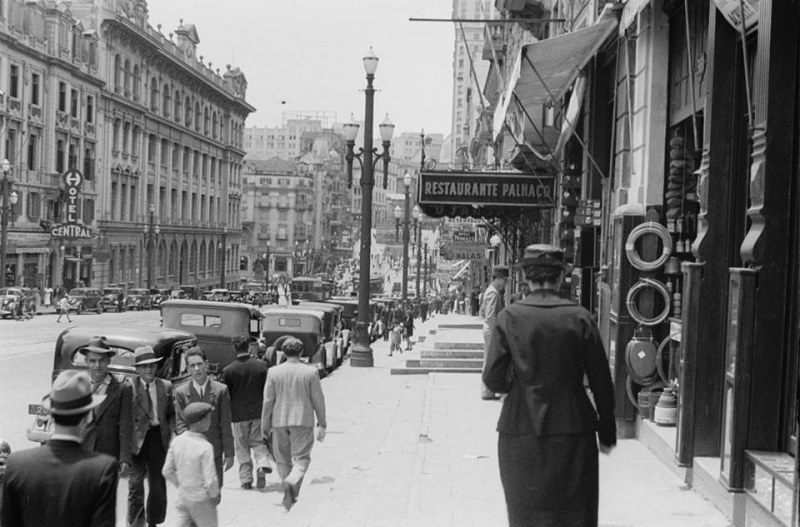
Avenida São João became São Paulo's Broadway (or 42nd Street) with lots of cinemas on its course. It reigned supreme as the fashionable main drag from the 1930s up to the mid 1960s when decay started settling in with the imposition of a brutal military dictatorship that took hold of Brazil until the mid 1980s when everything that could go wrong did go wrong.
glorious Avenida São João seen from the top of State of São Paulo Bank in 1950, with Banco do Brasil building still under construction.
Avenida São João in the 1950s. See the trams going up the avenue westbound.
same place a couple of years later (late 1950s).
night life at Avenida São João in the late 1950s.
Post Office in the foreground while Praça do Correio was being built in the early 1950s.
1970s.
this photo must've been taken before 1947.
 late 1960s.


Av. S.Joao right-hand side going towards Lapa; Hotel Central and Hotel Britannia in 1953. Mother & kids walk up Avenida São João by the Main Post Office in 1945. Two ladies hand-in-hand in the 1940s.
at a tram stop (parada) next to rua Dom José de Barros before 1964. same photo colourized. See the bar on the corner of rua Dom José de Barros; it belonged to Ivan's father. Ivan was a young man who went to Colégio Estadual Maximiliano Pereira dos Santos, in Vila Madalena; we were in the same class in 1963. Many years later, Paulo Naoto Tyba told me he and Ivan used to be mates at that time. What a small world.

Avenida São João seen from the opposite side looking East. On the left-hand side one can see Cine Broadway. The tram goes to Avenida Angelica.
1950s.
A postman starts his day at Avenida São João in 1963. Photo taken circa 1940. See Cine UFA on the right? It was a German movie house that was 'discontinued' when Brazil entered WWII in 1942, on the side of the Americans.
Av. São João next to rua Conselheiro Crispiniano and Cine Art Palácio in 1955.
an earlier shot o the same place taken by U.S. Life magazine.
Two fashion models at Avenida São João in 1962.

12 August 1966 - the last day trams rode in São Paulo. Avenida São João looking west circa 1950.
Av. São João & Líbero Badaró in 1914, with the towers of Igreja dos Homens Pretos & Lutheran Church in the background.
Rua Líbero Badaró & Avenida São João on a rainy day in the 1940s.
Avenida São João in glorious colours... trams and busses were red & yellow... Here's looking eastward with Largo do Paissundú on the left and Rua Conselheiro Crispiniano on the right-hand-side.
Avenida São João further down. Cine Metro which was showing 1938's 'Boys Town' with Spencer Tracy and Mickey Rooney. This must be 1939 or 1940.
Cine Metro on the right and First City National Bank on the left circa 1961.
Avenida São João in the mid-1970s. One can not but notice VW's beetles (and a VW kombi on the left-hand side) were the majority of cars on the street. The bus is a Mercedes-Benz made. Note Cine Saci on the right-hand side, was a popular cinema that catered especially for the unemployed. One could get in to watch a flick in the morning and stay until past lunch time.
As the tram-car rails are still on the street-bed this could be 1964...
Predio Martinelli seen from Rua Líbero Badaró, in 2024.


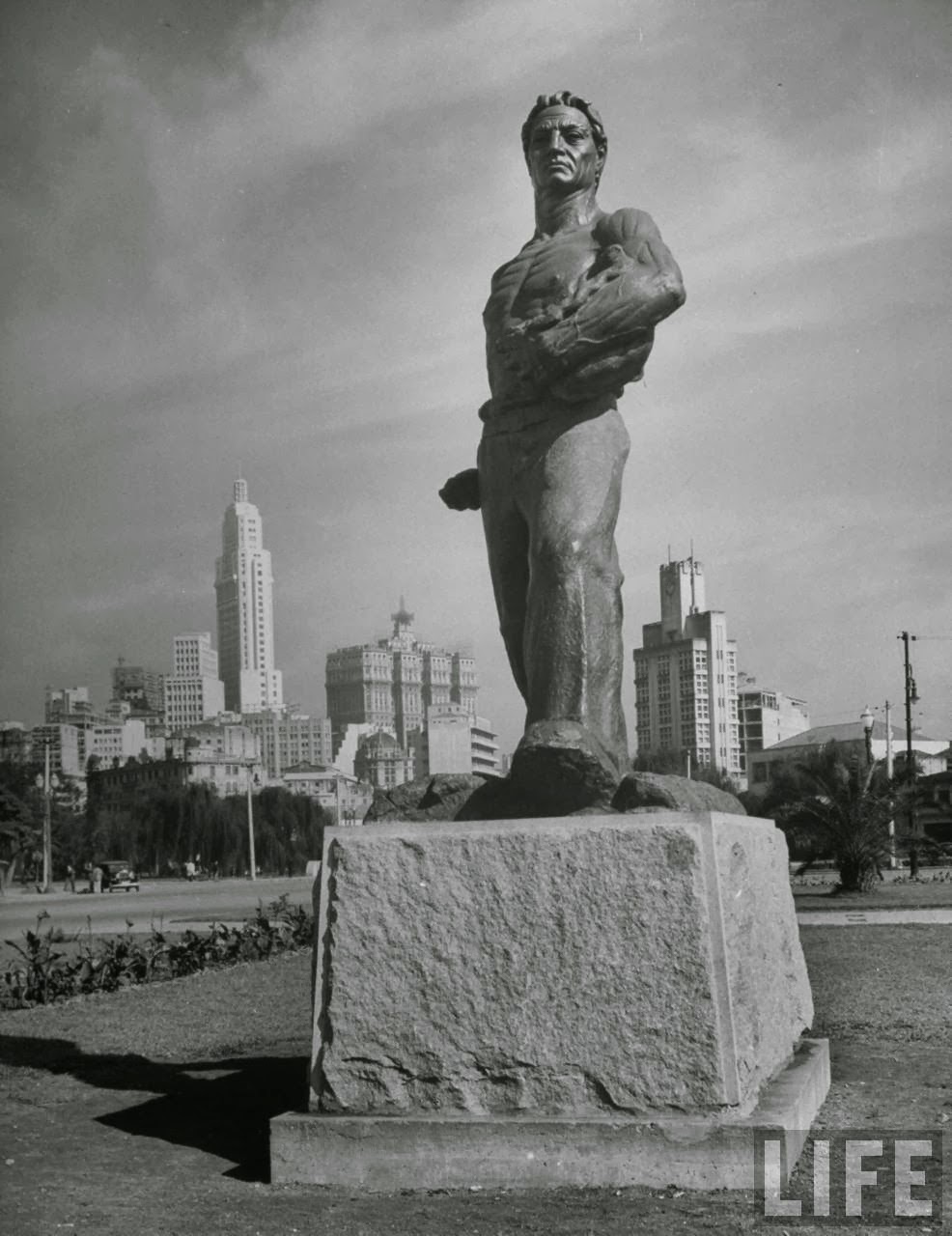 the imposing figure of a peasant sowing his seeds on Parque D.Pedro II having São Paulo skyline in the background. This statue was uprooted from there and 'exiled' to the outskirts of town near CEAGESP in Jaguaré - when the Park was torn apart and criss-crossed with highways and bridges leading nowhere in the 1970s when the Military ruled the country with iron-fisted hands. As a result of ill-conceived planning Parque D. Pedro had an instant death and is only lingering on the brink of infamy and opprobrium ever since.
.jpg)


.jpg)


.jpg)


.jpg)